




Ingredients
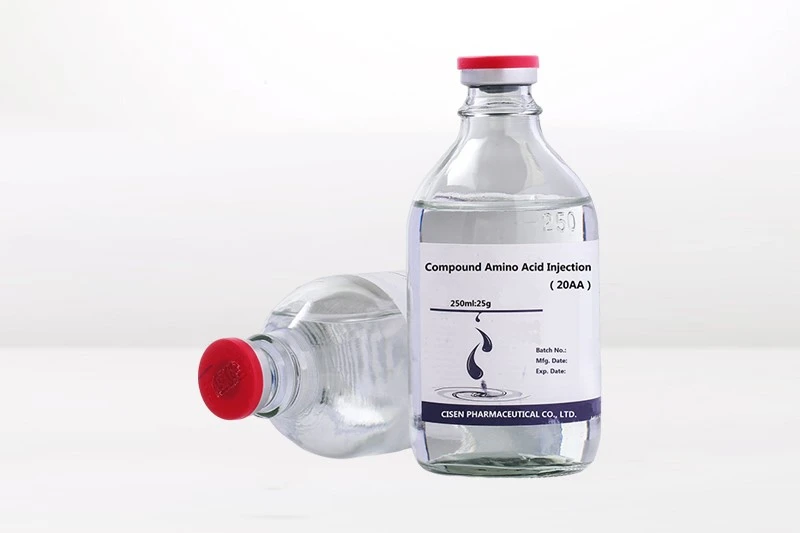
This product is a sterilized aqueous solution prepared from 20 types of amino acids.
Each 1000ml contains:
Isoleucine 8.80g, Leucine 13.60g, Lysine acetate 10.60g, Methionine 1.20g, Phenylalanine 1.60g, Lysine 4.60g, Tryptophan 1.50g, Valine 10.60g, Arginine 8.80g, Histidine 4.70g, Glycine 6.30g, Alanine 8.30g, Proline 7.10g, Aspartic acid 2.50g, Aspartame 0.55g, N-acetyl-L-cysteine 0.80g, Glutamic acid 5.70g, Ornithine hydrochloride 1.66g, Serine 3.70g, N-acetyl-L-Tyrosine 0.86g and ETC.
Character
This product is a colorless to slightly yellow clear liquid. Glass bottle.
Indications/Functional Indications
Prevention and treatment of hepatic encephalopathy; Intravenous nutrition during the acute phase of liver disease or hepatic encephalopathy.
Specifications
500ml:50g(Total amino acid).
Usage and dosage
Should be used under the guidance of a physician.
This product can be administered via central vein infusion.
Adults: Unless in special circumstances, the recommended average dose is 7-10 milliliters per kilogram per day. The drip rate can reach 1 milliliter/kilogram/hour.
The infusion rate can be accelerated in the first few hours of treatment for patients with hepatic coma. For example, for a patient weighing 70 kilograms, 150 milliliters per hour during the first to second hours; From the 2nd to the 4th hour, 75 milliliters per hour; Starting from the 5th hour, 45 milliliters per hour.
Attention
Close attention should be paid to water, electrolyte, and acid-base balance, and electrolytes should be replenished based on serum ion spectra. To support the input of amino acids in synthetic metabolism and achieve optimal utilization, energy substances (glucose and fat) should be input simultaneously. Patients with hyponatremia or elevated serum osmotic pressure should be cautious about infusion, as too fast an infusion rate can cause intolerance and amino acid imbalance due to renal amino acid loss. For patients with simultaneous renal insufficiency, the dosage of amino acids should be adjusted according to the levels of serum urea and creatinine. Amino acid therapy is not intended to replace proven methods of treating hepatic encephalopathy, such as purification therapy, the use of lactulose and/or intestinal antibiotics for sterilization.
Storage
Avoid light and store below 25 degrees Celsius.
Hot Tags: compound amino acid injection (20aa), China compound amino acid injection (20aa) manufacturers, suppliers, Compound Amino Acid Injection(18AA), Sitagliptin Phosphate Cisen, antiallergic medicine, Glycerine Enema Lubricating Laxative, Bromfenac Sodium, vitamin


