


Hey there! As a supplier of antiallergic medicine, I often get asked a bunch of questions about how our products work and what conditions they can treat. One question that's been popping up a lot lately is, "Can antiallergic medicine be used for hereditary angioedema?" Let's dig into this topic and see what we can find out.
First off, let's understand what hereditary angioedema (HAE) is. HAE is a rare genetic disorder that causes sudden swelling in different parts of the body, like the face, hands, feet, and even the intestines and airway. This swelling is super painful and can be life - threatening if it affects the airway. It's caused by a deficiency or malfunction of a protein called C1 - esterase inhibitor.
Now, antiallergic medicines are mainly designed to deal with allergic reactions. When you have an allergy, your body's immune system overreacts to a harmless substance like pollen, pet dander, or certain foods. Antiallergic drugs work by blocking the effects of histamine, a chemical that your body releases during an allergic reaction. This helps to relieve symptoms like itching, sneezing, and runny nose.
So, can antiallergic medicine work for HAE? Well, the short answer is that it's complicated. HAE is not an allergic reaction, and the swelling in HAE is not caused by histamine. Most antiallergic drugs target histamine receptors, so they're not going to be very effective in treating the swelling associated with HAE.
However, there are some cases where antiallergic medicine might have a small role to play. For example, some patients with HAE may also have allergies. In those cases, using antiallergic medicine can help with the allergic symptoms, which might make the patient feel a bit better overall. But it's important to note that this is just dealing with the allergic part, not the HAE itself.
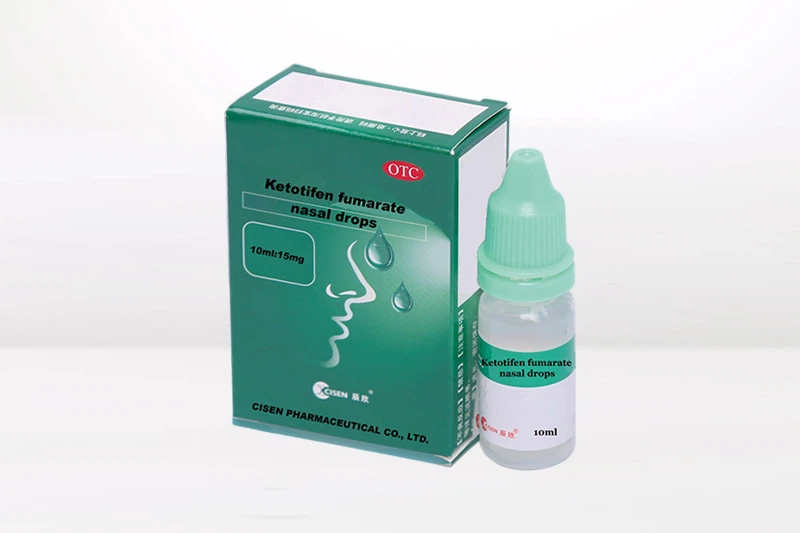
Let's talk about some of the antiallergic medicines we supply. One of our popular products is Ketotifen Fumarate Nasal Drops. These nasal drops are great for treating allergic rhinitis. They work by stabilizing mast cells, which are cells in your body that release histamine during an allergic reaction. By stabilizing these cells, the drops can prevent the release of histamine and reduce symptoms like nasal congestion, sneezing, and itching.
But again, when it comes to HAE, Ketotifen Fumarate Nasal Drops aren't going to be a cure - all. Since HAE isn't related to histamine - mediated reactions, the main mechanism of action of these drops won't address the root cause of the swelling in HAE.
There are also other types of antiallergic drugs like antihistamines. These come in different forms, like tablets, syrups, and creams. They work by blocking the histamine receptors in your body, so they can quickly relieve symptoms like itching, hives, and swelling caused by allergies. But for HAE patients, these antihistamines are likely to have limited efficacy.
The standard treatment for HAE usually involves medications that target the underlying problem of C1 - esterase inhibitor deficiency. These can include replacement therapies that provide the missing C1 - esterase inhibitor or drugs that regulate the activity of the proteins involved in the swelling process.
So, why do some people still wonder if antiallergic medicine can be used for HAE? Well, sometimes the symptoms of HAE can look similar to allergic reactions. Both can cause swelling, and it's easy for people to assume that the same treatment might work. Also, antiallergic medicines are more widely available and often have fewer side effects compared to some of the specialized HAE treatments.
Despite the limited effectiveness of antiallergic medicine in treating HAE, it's still important to have a range of options for patients. For those HAE patients who also suffer from allergies, using our antiallergic products can improve their quality of life by managing the allergic symptoms.
If you're a healthcare provider or a patient looking for antiallergic medicine, we're here to help. We offer high - quality antiallergic products that are safe and effective for treating various allergic conditions. Whether it's allergic rhinitis, skin allergies, or other allergic reactions, our products can provide relief.
If you're interested in learning more about our antiallergic medicine or want to discuss potential purchases, feel free to reach out. We're always happy to have a chat and see how we can meet your needs.
To sum it up, while antiallergic medicine has its place in treating allergic reactions, it's not a primary treatment for hereditary angioedema. But for patients who have both HAE and allergies, it can still be a useful addition to their treatment plan.
References:
- Bork K, Barnstedt SE, Hardt J, et al. A long - term follow - up of patients with hereditary angioedema. Ann Intern Med. 1996;124(1 Pt 1):67–73.
- Kaplan AP. Hereditary and acquired angioedema: problems and progress: translational advances in diagnosis and treatment. J Allergy Clin Immunol. 2010;126(3):451–463.
- Simons FE. Antihistamines. N Engl J Med. 2004;351(21):2203–2217.