


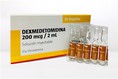


Dexmedetomidine hydrochloride is an organic compound with the molecular formula C13H17ClN2. It is an alpha 2 adrenergic receptor agonist with analgesic and sedative activity.
Dexmedetomidine is a relatively selective a2 adrenergic receptor agonist with sedative effects. When animals receive slow intravenous infusion of dexmedetomidine 10-300 μ g/kg, selective effects on a2 adrenergic receptors can be observed. However, at higher doses (³ 1000mg/kg), slow or rapid intravenous infusion has effects on both a1 and a2 receptors.

Genetic toxicity
The Ames test and mammalian cell positive gene mutation test results were both negative for dexmedetomidine. The in vitro human lymphocyte chromosome aberration test under S9 metabolic activation conditions in rats and the in vivo micronucleus test in NMRI mice were positive, but the in vitro human lymphocyte chromosome aberration test with or without S9 metabolic activation conditions and the in vivo micronucleus test in CD1 mice were negative.
Reproductive toxicity
Daily subcutaneous injection of dexmedetomidine at a dose of up to 54 μ g/kg (calculated based on mg/m2, lower than the maximum recommended human intravenous dose) did not have any effect on fertility in male or female rats 10 weeks and 3 weeks before self mating until mating.
Subcutaneous injection of dexmedetomidine at a dose of up to 200 μ g/kg was administered to rats on days 5-16 of pregnancy, and at a dose of up to 96 μ g/kg was administered to rabbits on days 6-18 of pregnancy, with no teratogenic effects observed. According to mg/m2 calculation, the dose for rats is equivalent to twice the maximum recommended intravenous dose for human administration; According to the plasma drug AUC value, the exposure level in rabbits is similar to the exposure level at the maximum recommended human intravenous injection dose. At a dose of 200 μ g/kg, fetal toxicity was observed in rats, manifested as increased loss after implantation and decreased number of surviving offspring. The no effect dose is 20 μ g/kg (calculated based on mg/m2, lower than the maximum recommended human intravenous dose).
Subcutaneous injection of dexmedetomidine into rats from the 16th day of pregnancy to lactation resulted in weight loss in the offspring at doses of 8 and 32 μ g/kg (calculated based on mg/m2, lower than the maximum recommended human intravenous dose), and delayed motor function development was observed in the 32 μ g/kg dose group. The F2 generation of the 32 μ g/kg dose group also showed embryonic and fetal toxicity. No toxicity was observed at a dose of 2 μ g/kg.
Subcutaneous injection of radiolabeled dexmedetomidine in pregnant rats showed placental transport.
Hot Tags: dexmedetomidine hydrochloride, China dexmedetomidine hydrochloride manufacturers, suppliers, receptor blocker, Sodium Bromofenate Eye Drops, Valsartan and Hydrochlorothiazide Tablet, Alanyl Glutamine Injetion, Dexmedetomidine Hydrochloride, Prednisone Acetate Tablet


