


Allergies are a common health issue that affects millions of people worldwide. They occur when the immune system overreacts to a foreign substance, such as pollen, dust mites, or certain foods, identifying them as harmful invaders. This overreaction triggers a series of symptoms, including sneezing, itching, runny nose, and watery eyes. Antiallergic medicine plays a crucial role in managing these symptoms and improving the quality of life for allergy sufferers. As a leading antiallergic medicine supplier, I am excited to share insights into how these medications work.
The Immune System and Allergic Reactions
To understand how antiallergic medicine works, it's essential to first grasp the basics of the immune system's response to allergens. When an allergen enters the body, it binds to specific antibodies called immunoglobulin E (IgE) that are attached to mast cells and basophils, two types of immune cells. This binding causes the mast cells and basophils to release various chemical mediators, the most well - known of which is histamine.
Histamine is a key player in allergic reactions. It causes blood vessels to dilate, leading to redness and swelling. It also increases the permeability of blood vessels, allowing fluid to leak into the surrounding tissues, which results in a runny nose and swelling of the nasal passages. Additionally, histamine stimulates nerve endings, causing itching and sneezing.
Types of Antiallergic Medicine and Their Mechanisms
Antihistamines
Antihistamines are perhaps the most commonly used antiallergic medications. They work by blocking the action of histamine at its receptors. There are two main types of histamine receptors: H1 and H2. Antihistamines used for allergic reactions primarily target the H1 receptors.
First - generation antihistamines, such as diphenhydramine, have been around for a long time. They are effective in relieving allergy symptoms but often cause drowsiness because they can cross the blood - brain barrier and interact with histamine receptors in the central nervous system. Second - generation antihistamines, like loratadine and cetirizine, are more selective for peripheral H1 receptors and are less likely to cause drowsiness.
When an antihistamine binds to the H1 receptor, it prevents histamine from attaching to the receptor. As a result, the effects of histamine, such as vasodilation, increased vascular permeability, and itching, are blocked. This leads to a reduction in allergy symptoms, including sneezing, itching, and a runny nose.
Decongestants
Decongestants are another type of antiallergic medicine, often used to relieve nasal congestion. They work by constricting the blood vessels in the nasal passages. This reduces the swelling of the nasal mucosa and allows for easier breathing.
Pseudoephedrine and phenylephrine are common decongestants. They act on alpha - adrenergic receptors in the smooth muscle of blood vessels. When these receptors are activated, the smooth muscle contracts, narrowing the blood vessels. However, decongestants should be used with caution as prolonged use can lead to a rebound effect, where the nasal congestion worsens once the medication wears off.
Corticosteroids
Corticosteroids are powerful anti - inflammatory medications used to treat severe allergic reactions. They work by suppressing the immune system's inflammatory response. Corticosteroids can be administered topically (e.g., nasal sprays, creams), orally, or by injection.
In the context of allergies, corticosteroids reduce the production of inflammatory mediators, such as cytokines and prostaglandins. They also inhibit the migration of immune cells to the site of the allergic reaction. For example, nasal corticosteroid sprays are commonly used to treat allergic rhinitis. They reduce inflammation in the nasal mucosa, which helps to relieve symptoms such as nasal congestion, sneezing, and itching.
Mast Cell Stabilizers
Mast cell stabilizers, such as cromolyn sodium, work by preventing the release of histamine and other chemical mediators from mast cells. They do this by stabilizing the cell membrane of mast cells, making it more difficult for the allergen - IgE complex to trigger the release of these mediators.
Mast cell stabilizers are often used as a preventive measure. They need to be used regularly, even when symptoms are not present, to be effective. They are particularly useful for people with seasonal allergies, as they can help reduce the severity of allergic reactions when the allergen is present.
Ketotifen Fumarate Nasal Drops
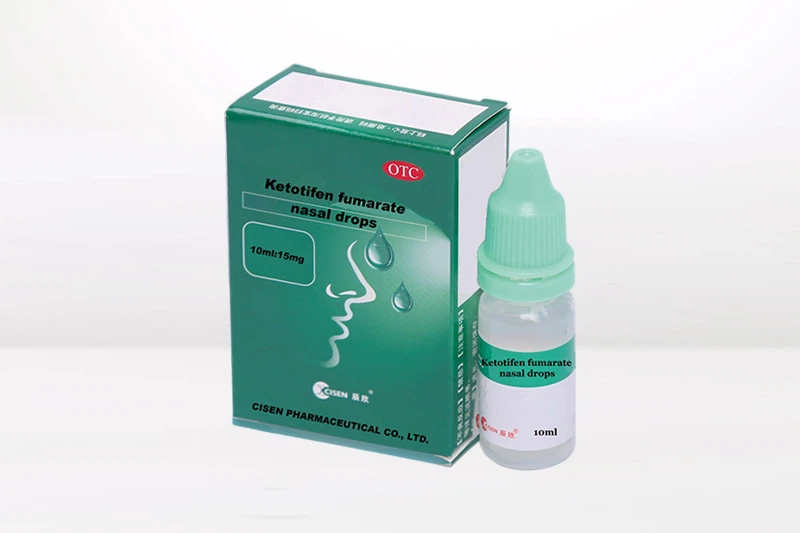
Ketotifen Fumarate Nasal Drops are a unique antiallergic medication. Ketotifen has both antihistamine and mast cell stabilizing properties. It blocks H1 receptors, similar to other antihistamines, preventing the effects of histamine. At the same time, it stabilizes mast cells, reducing the release of histamine and other inflammatory mediators.
These nasal drops are specifically formulated to target allergic rhinitis. They are applied directly to the nasal mucosa, providing a local effect. This can lead to a rapid reduction in symptoms such as sneezing, itching, and a runny nose. The combination of antihistamine and mast cell stabilizing actions makes Ketotifen Fumarate Nasal Drops a comprehensive solution for managing allergic nasal symptoms.
Factors Affecting the Efficacy of Antiallergic Medicine
The effectiveness of antiallergic medicine can be influenced by several factors. The type and severity of the allergy play a significant role. For mild allergies, over - the - counter antihistamines may be sufficient to control symptoms. However, for more severe or persistent allergies, prescription medications, such as corticosteroids, may be required.
Individual differences in metabolism can also affect how a person responds to antiallergic medicine. Some people may metabolize medications more quickly or slowly, which can impact the duration and intensity of the medication's effect. Additionally, the timing of medication use is important. For example, taking antihistamines before exposure to an allergen can be more effective in preventing symptoms than taking them after symptoms have already developed.
Conclusion
Antiallergic medicine works through various mechanisms to manage the symptoms of allergies. Whether it's blocking histamine, constricting blood vessels, suppressing the immune response, or stabilizing mast cells, each type of medication plays a crucial role in providing relief to allergy sufferers.
As a supplier of antiallergic medicine, we are committed to providing high - quality products that meet the diverse needs of our customers. Our range of medications, including Ketotifen Fumarate Nasal Drops, is designed to effectively manage allergic symptoms and improve the quality of life for those affected by allergies.
If you are interested in learning more about our antiallergic medicine products or would like to discuss potential procurement opportunities, please feel free to reach out. We look forward to the possibility of working with you to address the challenges of allergies.
References
- Goodman & Gilman's The Pharmacological Basis of Therapeutics. 13th Edition.
- Basic and Clinical Pharmacology. 15th Edition.
- Harrison's Principles of Internal Medicine. 21st Edition.