


Hey there, folks! If you're dealing with solar urticaria, you know how annoying it can be. The itchy, red welts that pop up after even a little bit of sun exposure can really put a damper on your day. But don't worry, there are some great anti - allergic medicines out there that can help you manage this condition. And guess what? I'm an anti - allergic medicine supplier, so I've got the lowdown on all the good stuff.
First off, let's talk about what solar urticaria is. It's a type of physical urticaria, which means it's triggered by a physical stimulus, in this case, sunlight. When your skin is exposed to the sun, your immune system overreacts, releasing histamine and other chemicals that cause those itchy, swollen bumps. It can range from mild to severe, and for some people, it can be a real pain in the neck.
One of the most commonly used anti - allergic medicines for solar urticaria is anti - histamines. These drugs work by blocking the action of histamine, which helps to reduce the itching, swelling, and redness associated with the condition.
First - generation anti - histamines
The first - generation anti - histamines, like diphenhydramine, have been around for a long time. They're pretty effective at relieving the symptoms of solar urticaria, but they also have some drawbacks. One of the biggest issues is that they can make you really drowsy. I mean, who wants to be falling asleep in the middle of the day just because they took a pill to stop the itching?
But on the plus side, they work quickly. If you've just been out in the sun and the welts are starting to appear, taking a first - generation anti - histamine can give you some relief within about 30 minutes. They're also relatively inexpensive, which is a big plus for a lot of people.
Second - generation anti - histamines
Then there are the second - generation anti - histamines, like loratadine and cetirizine. These are a bit newer on the scene, and they have a major advantage over the first - generation ones: they don't make you as drowsy. You can take them during the day and still go about your normal activities without feeling like you're in a fog.
They also tend to last longer, so you don't have to take them as often. For example, loratadine is usually taken once a day, and it can provide 24 - hour relief from the symptoms of solar urticaria. However, they might take a little longer to start working compared to the first - generation anti - histamines, usually about an hour or so.
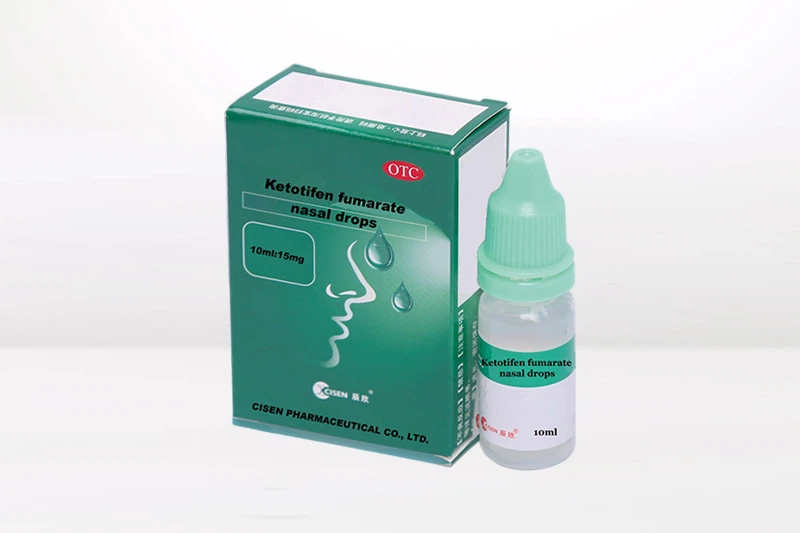
Another option is Ketotifen Fumarate Nasal Drops. Now, you might be thinking, "Nasal drops? For solar urticaria?" Well, ketotifen is an anti - allergic drug that can also be used to treat skin conditions like solar urticaria. It works by stabilizing the mast cells, which are the cells in your body that release histamine when they're triggered. By keeping the mast cells from releasing histamine, ketotifen can help prevent the symptoms of solar urticaria from occurring in the first place.
These nasal drops can be a great alternative for people who don't like taking pills or who have trouble swallowing them. And they're pretty easy to use. You just put a few drops in each nostril, and you're good to go.
Corticosteroids are another type of anti - allergic medicine that can be used for solar urticaria. They work by reducing inflammation in the body. Topical corticosteroids, like hydrocortisone cream, can be applied directly to the affected areas of the skin. This can help reduce the itching and redness pretty quickly.
However, long - term use of topical corticosteroids can have some side effects, like thinning of the skin. So, they're usually only recommended for short - term use, especially if you're using a high - strength cream.
Oral corticosteroids, like prednisone, are more powerful and are usually reserved for more severe cases of solar urticaria. They can be very effective at quickly reducing the symptoms, but they also have more serious side effects, especially if used for a long time. These can include weight gain, high blood pressure, and increased risk of infections. So, doctors usually try to use them sparingly.
Mast cell stabilizers, apart from ketotifen, are also important in the treatment of solar urticaria. Cromolyn sodium is one such drug. It works by preventing the mast cells from releasing histamine and other chemicals that cause the allergic reaction. It's often used as a preventive measure. You can take it before you go out in the sun to try and stop the symptoms from occurring.
But like all medications, it's not perfect. It might take a few weeks of regular use before you start to see the full benefits, and it might not work for everyone.
When it comes to choosing the right anti - allergic medicine for solar urticaria, there are a few things to consider. First of all, you need to think about the severity of your symptoms. If you have mild symptoms, you might be able to get away with using a topical treatment or a second - generation anti - histamine. But if your symptoms are more severe, you might need something stronger, like oral corticosteroids.
You also need to think about your lifestyle. If you have a job that requires you to be alert during the day, you probably don't want to take a first - generation anti - histamine that's going to make you drowsy. And if you have trouble swallowing pills, something like nasal drops or a topical cream might be a better option for you.
As an anti - allergic medicine supplier, I've seen a lot of different cases of solar urticaria, and I know how frustrating it can be for people. That's why I'm always here to help you find the right treatment for your specific needs. Whether you're looking for a short - term solution to relieve the immediate symptoms or a long - term preventive measure, I've got a wide range of high - quality anti - allergic medicines.
If you're interested in learning more about the anti - allergic medicines we offer or if you want to discuss which one might be right for you, I'd love to have a chat. Just reach out, and we can start a conversation about your options. Don't let solar urticaria control your life. There are effective treatments out there, and I'm here to help you find them.
References
- Greaves MW. Physical urticarias. J Am Acad Dermatol. 1986;15(3 Pt 1):403 - 413.
- Maurer M, Metz M, Reiter M, et al. The EAACI/GA(2)LEN/EDF/WAO guideline for the definition, classification, diagnosis, and management of urticaria: the 2013 revision and update. Allergy. 2014;69(7):868 - 887.
- Zuberbier T, Asero R, Bindslev - Jensen C, et al. EAACI/GA(2)LEN/EDF/WAO guideline: management of urticaria. Allergy. 2009;64(10):1427 - 1443.