


Hey there, fitness enthusiasts and health - conscious peeps! Today, I'm super stoked to chat about how amino acids play a massive role in the body's response to exercise training. And guess what? I'm an amino acids supplier, so I've got the inside scoop on all things amino acids.
First off, let's get the basics down. Amino acids are like the building blocks of proteins. You know how you need bricks to build a house? Well, your body uses amino acids to build and repair tissues, make enzymes and hormones, and keep your immune system in tip - top shape. There are 20 different amino acids, and they're divided into two main groups: essential and non - essential. The essential ones are the ones your body can't make on its own, so you gotta get them from your diet or supplements.
When it comes to exercise training, amino acids are game - changers. Let's start with muscle growth and repair. Resistance training, like weightlifting, actually causes tiny tears in your muscle fibers. This might sound bad, but it's a normal part of the muscle - building process. Your body then goes into repair mode, and amino acids are the key players here.
Leucine, one of the essential amino acids, is like the drill sergeant for muscle protein synthesis. It kicks off a whole chain of events that tells your body to start making new muscle proteins. When you consume enough leucine, along with other amino acids, your muscles can recover faster and grow stronger. For example, if you're doing a heavy - duty weightlifting session, having a good dose of leucine - rich amino acids right after can really speed up the recovery process.
Another important aspect is reducing muscle soreness. You know that feeling of stiffness and pain a day or two after a tough workout? That's called delayed onset muscle soreness (DOMS). Amino acids can help with that. Glutamine, an amino acid that's super abundant in your muscles, plays a crucial role. It helps to reduce inflammation in your muscles, which is one of the main causes of DOMS. When your muscles aren't as inflamed, you'll feel less sore, and you'll be able to get back to your next workout sooner.
Endurance is also affected by amino acids. During long - duration exercise, like running a marathon or cycling for hours, your body starts to break down muscle protein for energy. This is not ideal if you're trying to maintain your muscle mass and keep your energy levels up. Branched - chain amino acids (BCAAs), which include leucine, isoleucine, and valine, can help. They can be used as an alternative energy source, sparing your muscle protein from being broken down. So, if you're an endurance athlete, taking BCAAs during your long workouts can help you perform better and preserve your muscle.
Now, let's talk about some of the products we offer. We've got Compound Amino Acid Injection(9AA). This injection is packed with a blend of nine different amino acids. It's great for people who need a quick and efficient way to get their amino acid fix, especially if they have trouble digesting solid foods or if they need a high - dose supplement. Whether you're a professional athlete or just someone who wants to boost their workout recovery, this product can be a real game - changer.
Alanyl Glutamine Injetion is another amazing product. Alanyl glutamine is a stable form of glutamine, which means it can be better absorbed by your body. As we mentioned earlier, glutamine is great for reducing muscle soreness and supporting your immune system. This injection is perfect for those intense training periods when your body needs that extra support.
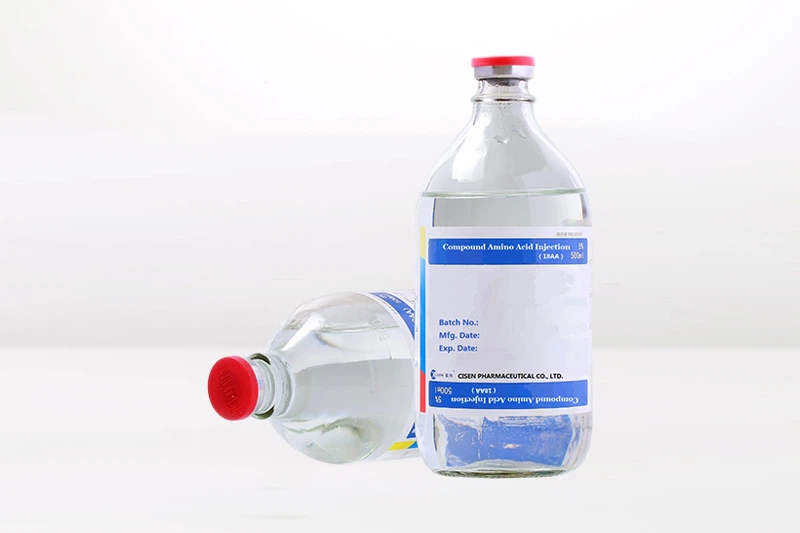
And then there's Compound Amino Acid Injection(18AA). With 18 different amino acids, it's a comprehensive blend that provides all the essential and non - essential amino acids your body needs. It's like a one - stop - shop for amino acid nutrition. Whether you're looking to build muscle, improve endurance, or just support overall health, this injection has got you covered.

But it's not just about the physical benefits. Amino acids can also have an impact on your mental state during exercise. Tyrosine, an amino acid, is involved in the production of neurotransmitters like dopamine and norepinephrine. These neurotransmitters are important for focus, motivation, and mood. When you're in the middle of a long and challenging workout, having enough tyrosine can help you stay focused and keep pushing through.
Now, you might be wondering how much amino acids you actually need. Well, it depends on a few factors, like your body weight, the intensity of your workouts, and your overall fitness goals. Generally, for muscle growth and repair, it's recommended to consume around 1 - 1.5 grams of protein per pound of body weight per day. Since amino acids are the building blocks of protein, you can use this as a rough guide.
If you're an athlete or someone who trains regularly, you might need even more. For example, a professional bodybuilder who's in the middle of a heavy training phase might need closer to 2 grams of protein per pound of body weight. And remember, it's not just about the quantity but also the quality of the amino acids. You want to make sure you're getting a good balance of all the essential and non - essential amino acids.
As an amino acids supplier, I can tell you that we offer high - quality products that are carefully formulated to meet your needs. Our products are made with the purest ingredients and go through strict quality control measures. Whether you're a beginner who's just starting out with exercise or a seasoned pro, our amino acid products can give you that extra edge.
If you're interested in learning more about our amino acid products or want to discuss your specific needs, don't hesitate to reach out. We're here to help you achieve your fitness goals, whether it's building muscle, improving endurance, or just feeling better after a workout. Contact us to start a procurement discussion, and let's work together to take your exercise training to the next level.
References
- Phillips, S. M. (2012). Dietary protein for athletes: from requirements to optimum adaptation. Journal of sports sciences, 30(9), 873 - 880.
- Van Hall, G., Sacchetti, M., Saris, W. H., & Wagenmakers, A. J. (2000). Ingestion of branched - chain amino acids and tryptophan during sustained exercise: effects on plasma tryptophan and free tryptophan/large neutral amino acids ratio. European journal of applied physiology, 82(3 - 4), 298 - 304.
- Tarnopolsky, M. A., Macdougall, J. D., Atkinson, S. A., Phillips, S. M., Chesley, A., & Schwarcz, H. (1992). Evaluation of protein requirements for trained strength athletes. Journal of applied physiology, 73(5), 1986 - 1995.